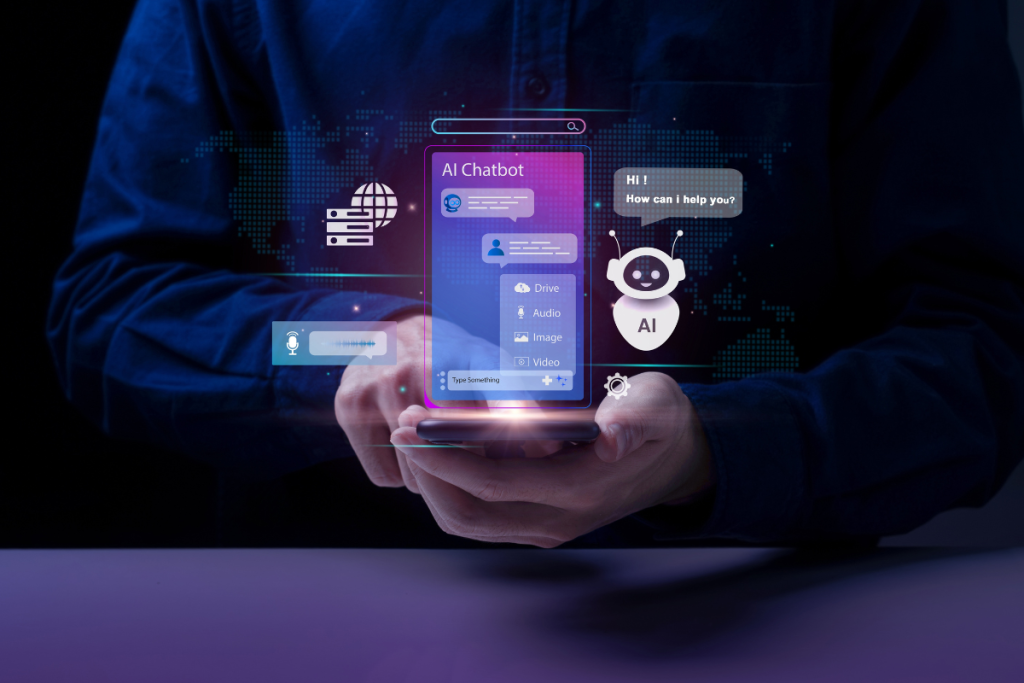
HR chatbots are Agentic User Interfaces that answer employee questions, automate routine HR tasks, and streamline internal communication. In a world where employees expect fast, consumer-grade support, and HR teams are drowning in repetitive work, these tools are becoming essential. They are no longer just a “nice to have” system.
In this guide, you’ll learn how HR chatbots work, their key benefits, the most important HR use cases, and the best HR chatbot tools in 2025/2026.
Ready to see what’s possible? Keep reading.
The Technology: How Do HR Chatbots Really Work?
HR chatbots work by turning everyday questions into data the system can understand and act on.
First, they use NLP, short for Natural Language Processing, to read what an employee types and identify the intent behind the words, along with extracting key details like dates, names, or request types. Then they talk to other tools your company already uses, like HR systems, payroll, benefits portals, learning platforms, or hiring tools, to pull the right information based on that understanding.
On top of that, they trigger automations, such as sending forms, checking PTO balances, or booking an interview slot, without a human clicking through five different screens. These Agentic User Interfaces take on tasks of a repetitive nature and help to alleviate the workload for human personnel.
Not all chatbots are equal, though. Basic chatbots respond using simple rules, like matching keywords or following a fixed decision tree. AI chatbots hold more natural, contextual conversations, pull real-time data, and remember what was said a few messages ago.
Smart human resource chatbot systems lower the friction in employee support because people get useful answers faster, with fewer back-and-forth emails. Some tools, like QueryPal, can even learn from past tickets and internal documents, which helps them get more accurate over time.
Where HR Chatbots Typically Live
HR chatbots usually live where your employees already are. You can add them to your HR portal, Slack, Microsoft Teams, the company intranet, or your internal support center so people do not have to hunt for help in a separate tool. One window, one question, instant reply.
The big win is convenience. Employees can ask about PTO, benefits, or policies at any time, even late at night or during a random weekend worry spiral. The chatbot stays awake, gives consistent answers, and lets your HR team sleep like actual humans.
What Are Some of the Benefits That HR Chatbots Bring to Modern HR Teams
HR chatbots help HR teams handle more work without burning out. They give instant, 24/7 answers to common questions about PTO, payroll, policies, and benefits, so people are not stuck waiting for email replies.
During hiring spikes or big onboarding waves, the chat bot hr system scales with you and keeps response times steady. This becomes especially critical when implementing new HRIS systems or managing workforce scheduling across teams.
Some major wins include:
- Fewer tickets, because routine questions are handled before they hit your HR inbox
- Better employee experience, with fast and accurate info from one trusted source
- Automated workflows for tasks like sending onboarding steps or training reminders
- Higher data accuracy, since the chatbot pulls from approved systems instead of guesswork
All of this frees HR personnel to focus on tricky cases, real conversations, and longer-term projects, not copy-pasting the same answer fifty times. This lightens the workload and prevents burnout. In turn, this prevents high turnover rates and training costs, which aligns with strategic workforce planning goals.
Benefits for Your Employees
HR chatbots make HR feel closer and easier to reach. Instead of digging through old emails or guessing who to message, employees can just ask a question in chat and get a clear answer.
That means less mystery around rules, benefits, and time off. HR feels more transparent because everyone gets the same information, pulled from the same trusted systems.
The best part is timing. People no longer have to wait for HR office hours or hope someone is free. At 10 p.m., you can ask, “What’s my PTO balance?” or “Where can I find our parental leave policy?” and get an instant reply.
Less friction, fewer awkward emails, and more control for employees over their own information.
Top HR Chatbot Use Cases
HR chatbots shine when they take on work that hits both high volume and high annoyance. Think of every repeat question about time off, every “where is that form” ping, every new hire who has the same three worries on day one. Those are prime targets.
Common high Return On Investment (ROI) use cases include:
- Employee FAQ automation for benefits, PTO, payroll, and policies, for example, answering “When is payday?” without a ticket.
- New hire onboarding support, like sending documents, sharing first week schedules, and nudging people to finish training.
- Recruiting and candidate FAQs, such as explaining interview steps or sharing role details.
- Time off requests and approvals, where employees ask for PTO and managers get a quick prompt to approve.
- Policy access and document lookup, helping people find the latest handbook or parental leave policy.
- Internal IT and HR support ticket triage, sorting issues, and routing them to the right team so specialists see the real problems, not the password resets.
These hr chatbot examples show how automation reduces manual work while improving employee satisfaction. For companies looking to optimize HR processes with AI, these use cases deliver immediate value.
Do HR Chatbots Improve Support Quality?
HR chatbots improve support quality by shrinking response times from days to seconds. Common questions get answered right away, which cuts the manual workload for HR and removes a lot of back and forth.
Because the chatbot pulls from approved systems and documents, it also reduces errors and outdated answers that confuse people and quietly damage trust.
Over time, this shows up as fewer tickets, smoother processes, and higher employee satisfaction scores. People feel heard, even when they are just chatting with software.
With routine tasks on autopilot, HR teams can spend more time on development, coaching, and real employee engagement. This brings up your company’s customer and employee retention numbers, making more income and less costs. Organizations that embrace AI in talent management see these benefits multiply across their entire workforce.
Best HR Chatbot Tools to Consider in 2025/2026
Some of the top HR chatbot tools to look at in 2025 and 2026 are:
- Moveworks, an AI assistant platform that resolves HR and IT requests, gives 24/7 support in tools like Slack and Teams, and scales across global workforces with autonomous workflow automation.
- Paradox (Olivia), a conversational recruiting chatbot that automates candidate screening, interview scheduling, and applicant tracking for high-volume hiring in retail, hospitality, and healthcare industries.
- IBM Watsonx Orchestrate for HR, enterprise-grade AI agents that support employee queries, talent processes, and learning across many business apps using strong NLP and automation.
- ServiceNow Virtual Agent, conversational AI built into the ServiceNow ecosystem for unified service delivery across IT and HR with deep workflow automation and knowledge base integration.
- Leena AI, a generative AI-powered HR automation assistant that manages employee queries, HR help desk operations, and onboarding with highly conversational and human-like interactions.
- Workato bots, built on an integration and automation platform that connects HR systems like Workday or SuccessFactors, so employees can trigger HR workflows straight from Slack or Teams.
- MeBeBot, a plug-and-play virtual assistant with over 300 preloaded FAQs that deploys in minutes across Slack, Teams, and SMS for fast implementation with minimal IT resources.
- QueryPal, a cross-functional, agentic user interface that learns from your tickets, documents, and knowledge bases to answer internal questions with sources and context.
The right bot depends on your company size, your current HR stack, and how complex your workflows are. Smaller teams might want a simple FAQ and onboarding helper, while larger or global orgs often need a platform that can plug into many systems, handle multiple languages, and support both HR and IT without turning your setup into chaos. When selecting the right HR software, consider how well these human resource chatbot platforms integrate with your existing technology.
What to Look for in a Good HR Chatbot
A good HR chatbot should understand what people actually mean, not just match a few words. Look for strong NLP so it can handle messy questions, plus secure handling of data that meets standards like GDPR and SOC 2. You want something your legal team can live with, and your HR team can trust.
Key things to check: accurate AI understanding of questions, deep integrations with your HRIS, ATS, and LMS, and the ability to run complex workflows like multi-step approvals or onboarding tasks.
Make sure the setup fits your team, whether that is a no-code builder or a more technical tool. Adoption also jumps when the chatbot lives inside your real communication hubs like Slack or Microsoft Teams, where people already spend their day. This integration strategy should align with your HR technology roadmap for seamless deployment.
What Challenges an HR Team Might See With Chatbots
HR chatbots are powerful, but they are not magic. They need clean, current HR data to work well. If your PTO rules or policies are outdated in the system, the bot will repeat those mistakes at scale.
Some employees also just prefer talking to a real person, especially for sensitive topics like performance issues, conflict, or medical leave. Understanding how chatbots change work dynamics helps teams prepare for this transition.
Bad setup is another risk. If the chatbot is trained on the wrong content or cannot hand off to a human, people get stuck and annoyed. Complex, messy questions still belong with HR experts who can judge context and nuance.
The good news is that modern AI makes these problems smaller. Today’s tools understand natural language better, can route tricky cases to humans, and learn from feedback, so support quality improves over time. Organizations that focus on successful AI implementation in HR avoid most of these pitfalls.
How to Reduce These Challenges
Reduce HR chatbot headaches by building on solid basics. Start small, plug it into real systems, and make sure humans are still easy to reach when things get weird or sensitive.
Practical ways to do that:
- Start with simple FAQs like PTO, holidays, and benefits before you automate complex workflows.
- Integrate the chatbot with your HRIS, ATS, and other core tools so it never works from siloed or outdated data.
- Keep policy docs and knowledge articles updated, and set a regular review schedule so the bot does not spread old rules.
- Define clear escalation rules so employees can move from chatbot to a real HR person quickly when the question is complex or emotional.
These strategies work best when supported by continuous learning and reskilling programs that help your team adapt alongside new technology.
The Future of Employee Support With HR Chatbots
Before HR chatbots, HR teams spent too much time answering repeated questions and chasing down simple requests. Employees waited for replies, and basic tasks slowed everything down.
With chatbots in place, people get instant answers, routine work is automated, and HR has more time for real, strategic work. The shift from reactive to proactive workforce planning becomes possible when HR teams free up bandwidth.
As AI keeps improving, it will play an even bigger role in how we support employees. Organizations that understand how AI is shaping HR roles can better prepare their teams for this evolution. Now’s a good time to explore HR chatbot tools that fit your current HR stack with EvolveUp.
References
- What Is a Chatbot? PDF file. United States Patent and Trademark Office — Petition Documents, ptacts.uspto.gov/ptacts/public-informations/petitions/1554563/download-documents?artifactId=fPSrjkmOHS9t06sGg5C7SLI6TfNmVREs5HTJUIXGL7QZZmafVlHlBek
- Grensing-Pophal, Lin. “How HR Is Using Virtual Chat and Chatbots.” SHRM, 24 May 2022. shrm.org/topics-tools/news/technology/how-hr-using-virtual-chat-chatbots