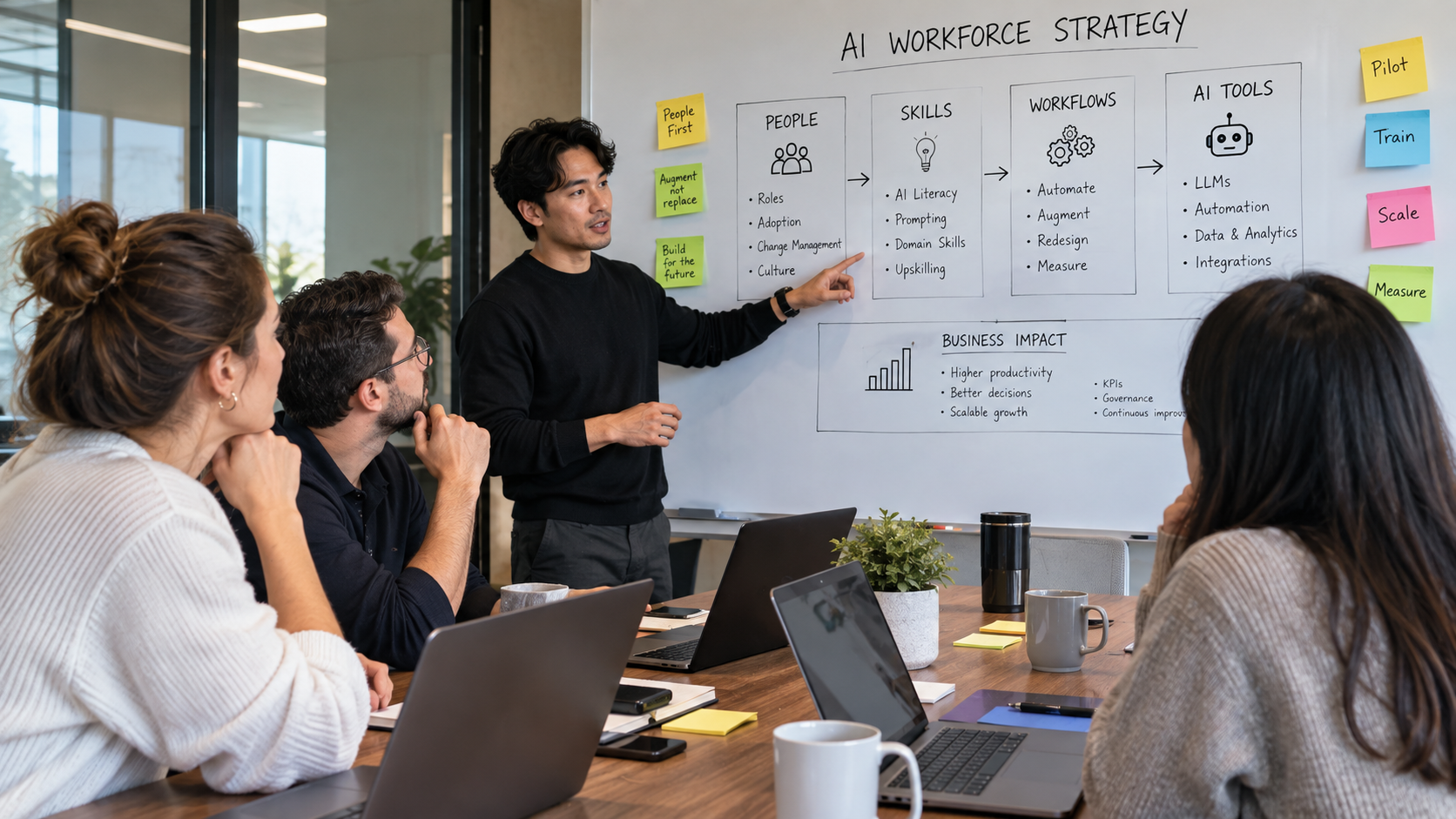
What is strategic workforce planning? It is a process that shows organizations what staff they’ll need to succeed in the future. It looks at who they have now and maps out who they’ll need next, making sure the right employees are ready when needed.
Many companies only start looking for new staff when someone leaves or during emergencies. This rushed approach often leads to poor choices and wasted money.
This guide explains how to build a strong workforce planning strategy, why it matters for business growth, and steps to prepare for future staffing needs. Each section provides practical ways to match your employees’ skills with your company’s goals.
Key Takeaways When it Comes to Workforce Planning
- Strategic workforce planning connects your hiring goals to your business plans, helping track progress over time.
- Using numbers and trends helps spot where you might need different skills or more people before it becomes urgent.
- Planning saves money on hiring, keeps good employees longer, and helps adjust when business needs change.
Defining Strategic Workforce Planning
Strategic workforce planning looks at who works for your company now and figures out who you’ll need in the future. Unlike waiting to hire when someone quits, this method plans ahead.
The process examines employee records to spot patterns, predicts what jobs will be important later, and finds areas where teams need new skills. When done right, it makes sure your employees’ abilities match what your company wants to achieve.
Why Strategic Workforce Planning Matters
Understanding how workforce planning helps your business can transform your HR team from paper-pushers into valuable business partners who drive company success.
Preventing Talent Shortages
The main benefit of workforce planning is making sure you don’t run short on skilled workers. Companies that grow quickly need qualified people ready to step in.
Without proper planning, key positions stay empty, which slows down work and cuts into profits. Looking ahead, lets you build a pool of trained workers through smart hiring and employee development programs. Effective workforce forecasting helps you anticipate these needs before they become critical.
What is the Financial Impact?
Poor workforce planning drains company money fast.
Rush hiring often means paying extra fees to recruiters and overtime to current staff. When employees keep leaving, the costs of finding and training new ones add up quickly.
A solid workforce planning strategy example includes maintaining the right mix of people and skills, which saves both hiring costs and payroll dollars. Tracking workforce management metrics allows you to measure the financial impact of your planning efforts.
Market Adaptability
Markets shift constantly as new technologies emerge and customer needs change. Good workforce planning creates teams that can handle these changes.
By watching industry trends, companies can prepare their workers for what’s next, whether that means learning new computer systems or bringing in people with fresh expertise. This preparation helps businesses stay competitive when markets change.
There are Clear Benefits to Strategic Workforce Planning
A strategic plan for your workforce offers clear benefits that help your company succeed.
Here are some of the main benefits of strategic workforce planning.
- You get the right people with the right skills in the right jobs at the right time.
- It lowers the costs of recruiting new employees.
- It helps fill open roles faster by building a talent pipeline in advance.
- It improves employee engagement by matching jobs to people’s skills and career goals.
- It helps keep good employees by showing them clear paths for growth in the company.
Alignment with Business Goals
Strategic workforce planning connects your people strategy directly to your business goals.
Here is how this connection helps your business in different situations.
- When you plan to enter a new market, workforce planning tells you what kind of team you need to succeed.
- When you are updating your technology, the plan identifies the technical skills you need and how to get them. Selecting the right HR software becomes essential for implementing these workforce planning strategies effectively.
- If your goal is to create new products, the plan helps you hire and develop creative people.
Risk Mitigation and Preparing for Future Problems
Planning ahead helps you prepare for future problems and reduce risks to your business.
This forward-looking approach gets you ready for common workforce challenges.
- It helps you plan for retirement by creating succession plans for critical roles.
- It ensures you always have leaders ready by developing employees with high potential.
- It prepares you for automation by retraining employees whose jobs might change.
- It keeps your team’s skills fresh by identifying and training for new abilities.
What is the Framework for Strategic Workforce Planning?
A good workforce plan is built on a framework that uses data and is always improving.
Data-Driven Decision Making
Data is the fuel for every step of strategic workforce planning. Instead of guessing, you use facts about your employees to make smart choices.
Analyzing information on employee performance, skills, and turnover helps HR and business leaders make decisions that match the company’s needs. Modern approaches show how AI transforms workforce planning by making data analysis faster and more accurate.
Repeatable Continuous Process
Workforce planning is not a one-time task. It is a cycle that you repeat to keep up with business changes. This keeps your workforce plan useful over the long term.
At EvolveUp, we use a clear, cyclical approach to guide companies.
- Assess: Review your current team to see what skills and strengths you have.
- Forecast: Predict what talent you will need based on your business strategy.
- Plan: Create an action plan to fill the gaps between the team you have and the team you need.
- Review: Put the plan into action, track your results, and make changes as you go.
Step-by-Step Process for Strategic Workforce Planning
We help businesses follow a structured process to make sure their workforce strategy works.
Step 1 – Define Your Business Strategy and Goals
First, you must understand the company’s main goals so your workforce plan can directly support the business strategy. Using SMART goals (Specific, Measurable, Achievable, Relevant, Time-bound) helps make sure your plan has a real impact.
Step 2 – Analyze Your Current Workforce
Next, analyze your current employees by creating a skills inventory, reviewing demographics, and assessing performance data. This gives you a clear picture of your current team’s strengths and weaknesses.
Step 3 – Forecast Your Company’s Future Needs
Now you can predict your future hiring needs. Think about your company’s growth plans, how many people might leave, and how new technology could change jobs. This helps you understand what your future workforce should look like.
Step 4 – Identify the Workforce Gaps
Compare your current team to your future needs to find the gaps. These skill gaps show you where you need to improve. From there, you can decide whether to build skills with training, buy them by hiring, borrow them with temporary staff, or automate the work with technology.
Step 5 – Develop Some Action Plans
Once you know the gaps, create specific action plans. If you need to “build” skills, your plan could include new training programs. If you need to “buy” talent, your plan will outline how you will recruit for those roles.
Step 6 – Implement and Monitor the Plans
Finally, put your plans into action and track your progress. Measure how well your actions are working and get feedback to make adjustments. This keeps your workforce plan relevant and effective.
Let the Systems Work for You: Workforce Technology and Analytics
Modern HR technology makes workforce planning easier and more accurate.
Here are some tools that support the strategic workforce planning process.
- Human Resource Information Systems (HRIS): Stores all core employee data.
- Applicant Tracking Systems (ATS): Provide data on recruitment and hiring.
- Analytics Dashboards: Turn data into charts and graphs that are easy to understand.
- AI Forecasting Tools: Use artificial intelligence to help predict future hiring needs more accurately.
Using these tools helps you make better decisions, reduce bias, and build a more flexible talent strategy. Discover how AI is transforming talent management to improve both planning and candidate experiences.
Workforce Planning Maturity Model
Companies go through different stages as they get better at workforce planning.
Knowing your stage helps you see where you can improve.
- Reactive: Hiring is done only in response to immediate needs.
- Operational: Planning is focused on short-term headcount for budgeting.
- Strategic: The workforce plan is connected to long-term business goals.
- Predictive: Advanced data is used to predict future needs and prepare for them.
Ask yourself questions like, “Is our hiring plan connected to our three-year business goals?” to see where you are. We can help you assess your maturity and create a plan to advance.
Moving from reactive to proactive approaches represents a critical evolution in workforce planning maturity.
What are Some Common Challenges & Their Solutions?
Putting a workforce plan in place can have some challenges.
Here are a few common problems and how you can solve them:
- Poor Data Quality: Inaccurate data leads to flawed plans. Establish clear data governance to ensure accuracy.
- Resistance to Change: Some people do not like new processes. A good change management plan with clear communication can help.
- Budget Limits: It can be hard to get money for new tools or training. Show the financial return of your plan to get the budget you need.
- Working in Silos: Workforce planning should involve different departments. Create a team with people from HR, finance, and operations.
Measuring Your Company’s ROI and Workforce Planning Success
To prove the value of your workforce plan, it is important to track key metrics that measure success and return on investment (ROI).
These workforce metrics help you measure your success. For smaller teams, the benefits of RPO can include faster hiring capacity, more predictable recruiting costs, and specialist support without building a full internal function.
- Forecast Accuracy: How close were your predictions to what you actually needed?
- Time-to-Fill: Are you filling jobs faster than before?
- Internal Mobility: Are you promoting more people from inside the company?
- Cost Per Hire: Has the average cost to hire a new person gone down?
- Employee Turnover: Are you keeping your good employees longer?
You can connect these numbers to business results, like showing how filling sales jobs faster increased company revenue.
Strategic Workforce Planning: What is Trending?
Workforce planning is always changing with new technology and ideas about work.
Knowing these trends helps you prepare for the future of work.
- AI in HR: Using artificial intelligence for more accurate forecasting and identifying ideal candidates.
- Hybrid and Remote Work: Plans must now include how to manage teams that work from different locations.
- Skills-Based Hiring: Companies are focusing more on the skills a person has rather than just their job history.
- The Gig Workforce: Plans are starting to include freelancers and contractors to create a more flexible team.
- Continuous Reskilling: Because things change so fast, ongoing training is now a key part of any workforce plan.
- Scenario Planning: Instead of one plan, companies are making plans for several possible futures.
Transform Your Workforce Strategy Into a Competitive Advantage
Strategic workforce planning aligns your people, technology, and goals to build a skilled, future-ready team. By proactively planning talent needs, you create a lasting competitive advantage for growth.
Ready to build a workforce that can power your future? Schedule a consultation with us to see how we can help you implement a strategic workforce planning framework.
FAQs About Strategic Workforce Planning
When putting a new plan into place, you want to make sure you ask all the right questions before hitting that “go button.” Here are a few of the commonly asked questions when it comes to Strategic Workforce Planning:
1. How often should strategic workforce planning be updated?
A major review of the plan should happen once a year, along with your business planning. You should also check on it every quarter to make small changes as needed.
2. Who owns the SWP process in an organization?
HR usually leads the process, but it is a team effort. Business leaders and finance teams must be involved to make sure the plan supports the entire company.
3. How is strategic workforce planning different from headcount planning?
Headcount planning is about short-term numbers and budgets. Strategic workforce planning is about the long-term skills and roles you will need to meet your business goals.
4. What technology and tools are commonly used for strategic workforce planning?
Companies use HRIS systems for employee data, analytics tools to see trends, and special software that can use AI to help predict future needs.
5. How long does it take to implement a strategic workforce planning process?
Starting a new workforce planning process can take three to six months. After that, it becomes a regular, ongoing part of your business.
References
- U.S. Office of Personnel Management. “Workforce Planning Guide.” OPM.gov, 2022, https://www.opm.gov/policy-data-oversight/human-capital-framework/reference-materials/talent-management/workforce-planning-guide.pdf.
- “Strategic Workforce Planning.” University of Oxford HR Support, Oxford.edu, https://hr.admin.ox.ac.uk/strategic-workforce-planning.