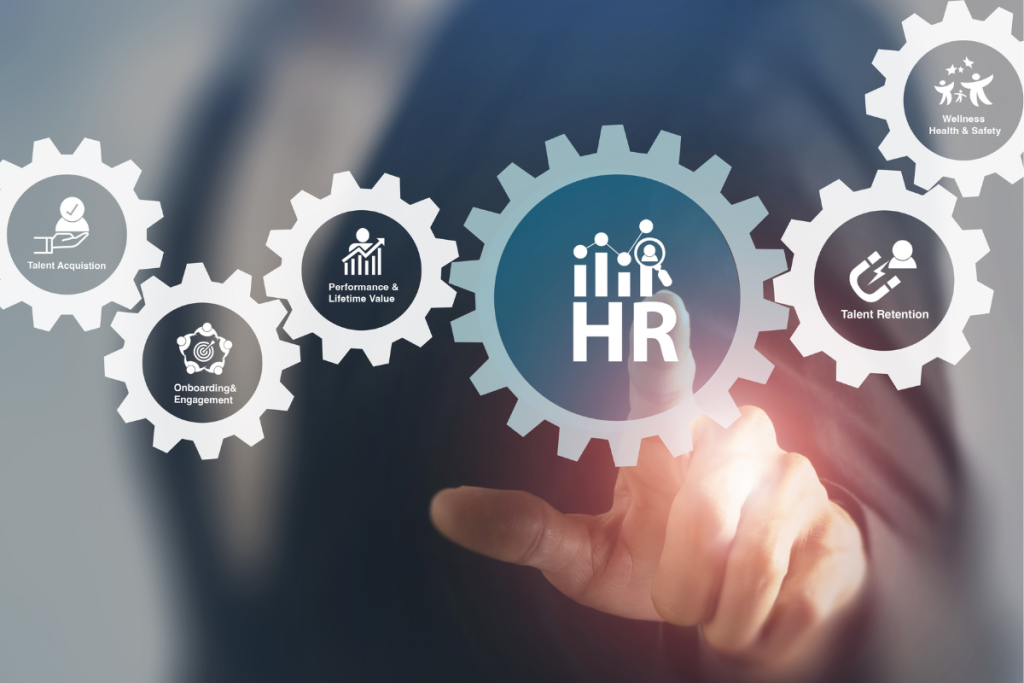
HR system integration connects your HR tools so that data moves between them on its own. The main benefit is that it cuts down on manual work, makes data more accurate, and brings all your employee information together.
This article will show you the good things about integration, give you real examples, and explain how to do it. We will also talk about problems you might face and help you choose between connecting your tools or buying one big system.
Keep reading to learn how to make your HR work easier and better.
Key Things to Remember…
- Integration stops you from typing the same data over and over.
- It gives you one true place for all your employee information.
- Start by linking tools that have the biggest effect, like payroll.
- Connected systems improve employee experience through faster onboarding and self-service access.
- Automated data flow reduces errors and ensures compliance across all HR functions.
- Real-time insights from integrated platforms enable better workforce planning and decision-making.
What Is HR System Integration?
HR system integration is simply about making your HR tools talk to each other. Think of it as building bridges between islands of information.
When your integrated HR systems work together, an action in one system can trigger an update in another without anyone having to manually retype information.
This typically involves connecting core systems like your Human Resource Information System (HRIS), payroll software, time and attendance trackers, applicant tracking system (ATS), benefits administration, and learning management system (LMS).
The goal is to create a unified HR ecosystem. In this ecosystem, employee information flows seamlessly from the moment they are a candidate through their entire employment journey.
Why HR System Integration Matters for Modern HR Teams
HR teams now use many different software programs. This makes human resource integration very important. If the tools do not talk to each other, it causes many problems.
The most common pain is duplicate data entry. An HR specialist might have to enter a new hire’s personal details into the ATS, then again into the HRIS for onboarding, and yet again into the payroll system.
This is not just inefficient; it is a recipe for inconsistent records and manual errors. Reporting becomes a nightmare when data is trapped in different systems, making it difficult to get a complete picture of the workforce.
The Benefits That Come With Integrating Your HR Systems
Putting your integrated human resource system together has many good points. It helps you save time, make fewer errors, and understand your workers better.
Core Operational Benefits
The most immediate advantages are seen in daily operations. Streamlined processes and reduced manual work are the primary gains. When data syncs automatically through hr software integration, your team is freed from repetitive administrative tasks.
This allows them to focus on more strategic initiatives like employee development and engagement.
Enhanced data accuracy is another critical benefit. Integration creates a single source of truth for employee data. An address change made in the self-service portal updates the HRIS, which then feeds the correct information to the payroll and benefits systems.
This consistency is vital for strong compliance management, ensuring cleaner records and more reliable audit trails for payroll and benefits reporting.
People & Insight Benefits
The impact of integration extends beyond the HR department. A connected system greatly improves the employee experience.
Onboarding becomes smoother because data from the ATS automatically populates the new hire forms in the HRIS. Employees enjoy accurate self-service portals and faster approvals for things like time-off requests.
For leadership, better reporting and analytics become possible. With consolidated workforce data, you can perform cross-functional reporting.
You can see how training investments from the LMS correlate with performance metrics from the review system. This provides HR metrics that offer a true view of the organization’s health.
- Reduced Administrative Burden: Automating data transfer cuts down on manual entry tasks.
- Improved Decision-Making: Unified data allows for accurate, comprehensive analytics.
- Enhanced Compliance: Automated syncs reduce the risk of manual reporting errors.
Common HR System Integration Examples
Real examples show you how hr software integrations work. The best place to start depends on your company’s size, tools, and problems.
High-Impact Integration Pairs to Start With
Some connections help you the most. They fix common problems that waste time. Starting with these can show quick wins.
ATS + Onboarding: This connection allows candidate data to flow directly into new-hire records. It solves the problem of re-keying information and speeds up the time to productivity for a new employee.
The benefit is a faster, more accurate onboarding process that improves the new hire’s first impression.
Payroll + Time & Attendance: This is often the most critical integration. It ensures that hours worked, overtime, and PTO are fed directly into the payroll system. This eliminates manual calculation errors and ensures employees are paid correctly and on time.
The benefit is payroll accuracy and significant time savings for the payroll team.
Performance Management + LMS: Linking these systems allows performance review outcomes to drive tailored training recommendations. If an employee needs to develop a specific skill, the LMS can automatically suggest relevant courses.
The benefit is a more personalized and effective approach to employee development.
HRIS + Benefits Administration: This integration automatically updates benefits enrollment based on employee status changes. A life event, like a marriage or the birth of a child, entered into the HRIS can trigger the appropriate benefits update workflow.
The benefit is timely and accurate benefits management, which is crucial for compliance and employee satisfaction.
HR Integration Methods That Work
You need to know how systems connect. The ways to do this can be simple or complex. The goal is always to let data be shared through effective hr data integration.
Main Ways to Connect Your HR Tools
There are three main ways to make your tools talk. The best way depends on your systems, your tech help, and your money.
API integrations are often the strongest way. APIs are rules that let programs talk to each other right away. They are flexible but might need a tech person to set up.
Native integrations are links made by the software companies. For example, an HR system company might have a ready link to a pay company. These are easier to set up but only work with certain partners.
Middleware, or integration platforms, act as a translator. They sit between systems that do not speak the same language. They take data from one system, change it, and send it to another. This is good for old systems or a mix of new and old software. This works great when you have a large system to switch from to something new; middleware bridges the gap.
These platforms sit in the middle, taking data from one system, transforming it into the correct format, and sending it to another. This approach is useful for connecting legacy systems or a mixed stack of modern and older software.
Steps to Implement HR System Integration
A good integration project follows steps. This helps HR work with IT and software companies. Plan first before you start building with your HR technology roadmap.
Create a Practical Integration Roadmap
Taking small steps keeps things from getting confusing. This plan gives you a clear path.
First, look at your current systems and pick what to do first. List all your HR tools. See how data moves now. Write down your biggest problems. Then choose one to three links that will help the most. Starting small shows that it works and gives you quick value.
Next, plan and build the link. This is where you get detailed. Match data fields between systems. Decide if data moves one way or both ways. Test everything in a safe practice area first. Then try it with a small group before everyone uses it.
Finally, you must monitor and maintain the integration. This is not a set-it-and-forget-it project.
You need to check sync logs regularly to ensure data is moving correctly, track data accuracy, and be prepared to adjust the integration when any of the connected software receives an update.
This ongoing refinement ensures the integration continues to meet your workflow needs.
- Look at Your Tools: List what you have and find your data problems.
- Plan the Link: Match data fields and decide how data moves.
- Test and Fix: Use a practice area and plan for care.
Some Challenges You Might Encounter with Your HR System Integration
Integration is helpful but can be hard. Knowing about problems before they happen helps you get ready during your HRIS implementation.
Common Challenges and How to Manage Them
Knowing what can go wrong helps you stop it. Each problem has a way to handle it.
Systems might not work together well. They might use different data styles. You might have an old system that cannot connect easily. To handle this, ask your IT person for help early. They can see if it will work before you start.
Keeping data safe is very important. You must protect worker information when it moves between integrated hr systems. A good way to handle this is to pick software companies with strong safety rules. Understand how they keep data safe.
Cost and needing help can be a problem. You might need to pay for a connection platform or for IT time. To manage this, start with a small link that helps a lot. This can show the value and get you more money for bigger projects.
Data security and privacy are paramount when moving employee information between systems. You must ensure data is safeguarded during transfer and storage.
A good mitigation strategy is to choose vendors with strong security certifications and to clearly understand the encryption and access control standards being used.
Cost and resource requirements can also be a hurdle. There may be costs for integration platforms or for dedicated IT time. This is especially relevant as organizations layer in AI implementation in HR, which depends on well-connected systems to deliver accurate results. To manage this, start with a small, high-impact integration to demonstrate ROI, which can help justify the budget for further projects.
What’s Better? HRIS Integration vs. All-in-One HR Platforms
A big choice for companies is whether to connect their tools or buy one big system. The best choice depends on your company’s size, money, and the tools you already have.
Choosing the Right Approach for Your Organization
Integration is good if you have strong tools that your team likes. It is also good if you have already spent money on your current systems and do not want to change.
An all-in-one platform may be the better choice if you are overwhelmed by tool sprawl and the maintenance of multiple vendor relationships. Understanding the differences between HRIS, HRMS, and HCM platforms helps clarify which level of consolidation your organization actually requires. It gives you one system to manage, one support team to contact, and one place for all your HR data.
This can make daily work feel smoother because everything fits together from the start. You also save time since you don’t have to jump between many tools or remember lots of logins.
It is also suitable if you have limited IT resources for managing integrations and value the simplicity of having one vendor responsible for the entire system. With one platform, updates, security checks, and fixes are more straightforward.
To decide, start by looking closely at how your team works each day by asking the list of questions below:
- Do our unique processes need special tools to work well?
- Would we get more value from a simple, standardized workflow?
- How does our team work today, and what slows them down?
- How much time do we spend switching between tools?
- Are we looking for flexibility, simplicity, or a mix of both?
Think about how your team works today, where the pain points are, and how much time is spent switching between tools. If your team doesn’t like the system, they won’t use it, or at least they will not use it well.
Your Path to a Connected HR Ecosystem
HR system integration is a journey that transforms your operations from administrative to strategic. By connecting your tools, you unlock efficiency, accuracy, and deeper insights into your workforce.
Whether you choose to integrate your existing systems or consider a new platform, the goal remains the same: creating a seamless flow of information that serves your employees and your business.
Whether you connect your tools or get a new system, the goal is the same: making information flow easily for your workers and your business.
If you want to see how integration can help your company, we at EvolveUp can help. Our team knows how to make HR technology work for business goals. Schedule an appointment with us to start making your connected HR system real.
References
“HR Software Integration Systems.” LA Software, lasoft.org/blog/hr-software-integration-systems/.
“Systems Integration.” Human Resources, University of California San Francisco, hr.ucsf.edu/job-templates/systems-integration.